Why Converting HTML Content to PDF Matters
Web content can change, disappear, require an internet connection, or display differently across browsers and screen sizes. This makes it difficult to keep a stable copy of an online invoice, article, receipt, report, or reference page.
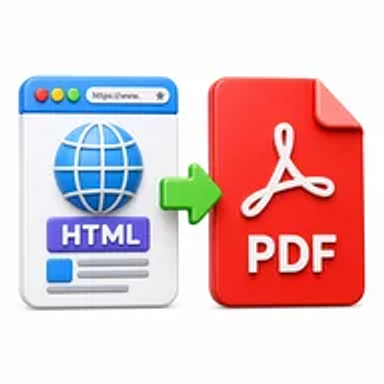
A PDF captures supported HTML content in a fixed document that is easier to print, share, annotate, archive, or attach to a record. It also gives recipients a familiar format that does not depend on the original webpage remaining available.
How Hemiley Simplifies HTML to PDF Conversion
Hemiley converts supported HTML files into PDF format through a browser-based workflow. Upload the HTML file, start conversion, and download the generated document when processing is complete.
The output is designed to preserve text, images, headings, tables, and page structure as closely as possible. External stylesheets, scripts, protected content, dynamic components, and remotely hosted assets may affect the final rendering.
Key Benefits
Free online tool
Convert supported HTML content without paid desktop software.
Stable document output
Save web-based information in a fixed PDF format.
Useful for printing and records
Create a version suitable for sharing, filing, or offline reference.
Secure file handling
Uploaded content is processed securely and is not intended to be retained longer than necessary.
Works across devices
Use the tool from modern desktop and mobile browsers.
Quality-focused rendering
Preserve supported page content and structure as accurately as possible.
Who Uses Our HTML to PDF Converter?
Developers and website teams
Review static HTML pages and save build documentation.
Finance and support teams
Archive web invoices, receipts, order summaries, and case records.
Students and researchers
Save supported online references for offline study and citation review.
Businesses and freelancers
Create client-ready copies of web reports, proposals, and documentation.
How to Convert HTML to PDF Online in 4 Steps
- 1
Upload the HTML file
Select supported HTML content from your device.
- 2
Check the source content
Confirm that required text, images, and styles are included.
- 3
Select Convert to PDF
Start the browser-based rendering process.
- 4
Download the PDF
Review the pages and save the finished document.
Common HTML to PDF Use Cases
- Archive web-based invoices, receipts, and transaction summaries.
- Save technical documentation and supported help pages for offline access.
- Create printable copies of reports, forms, and research material.
- Share a fixed review version of an HTML prototype or webpage.
- Keep records of supported web content that may later change.
Why Choose Hemiley?
Hemiley makes it easier to turn supported HTML content into a familiar document format. Upload the source file, convert it online, review the pages, and download a PDF for sharing or archiving.
The process runs in a web browser and does not require a desktop PDF printer, developer extension, or separate conversion application.
Related Free PDF Tools
Frequently Asked Questions
The tool is intended for supported HTML content. Protected pages, dynamic applications, scripts, login-only content, or remote assets may not render completely.
Supported styles are retained as closely as possible, but external stylesheets, fonts, scripts, and responsive layouts can affect the output.
No. A standard PDF is primarily a static document, so interactive forms, animations, and scripts may not function as they do in a browser.
Yes. The tool is designed to work in modern mobile and desktop browsers.
No. The conversion runs online without a virtual printer or browser plugin.